
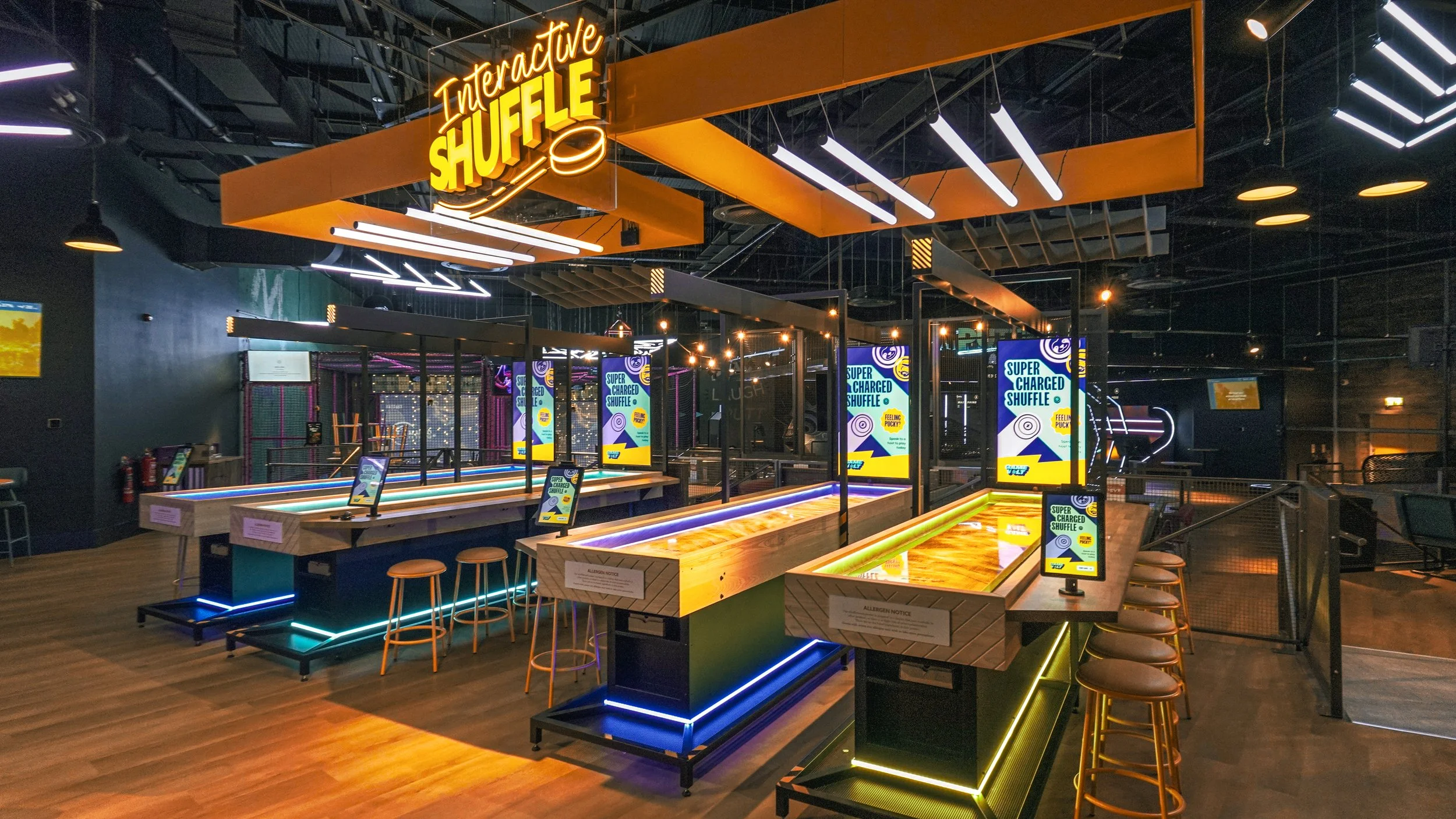
Interactive Shuffleboard for HOTELS
How modern hotels are turning entertainment into a guest experience advantage
The role of hotel entertainment has changed.
For years, bars, lounges, and leisure spaces within hotels were treated as supporting amenities. Useful additions to the guest experience, but rarely central to it. Today, that approach is shifting rapidly.
Modern guests expect more from hospitality environments. They want spaces that feel social, memorable, and experience-led rather than purely functional. Hotels are increasingly competing not just on rooms and location, but on atmosphere, activity, and the quality of the overall stay.
That shift is why interactive entertainment is becoming a much larger focus across the sector, particularly in hotels looking to increase dwell time, activate underutilised spaces, and encourage non-resident footfall.
Interactive shuffleboard has emerged as one of the strongest fits within this evolution.
Why shuffleboard works naturally in hotel environments
Experience matters more than amenities
One of the biggest shifts within hospitality is the growing importance of experiential value.
Guests increasingly remember how a hotel made them feel rather than simply what it provided. The spaces that create interaction, atmosphere, and shared experiences are often the ones that leave the strongest impression long after checkout.
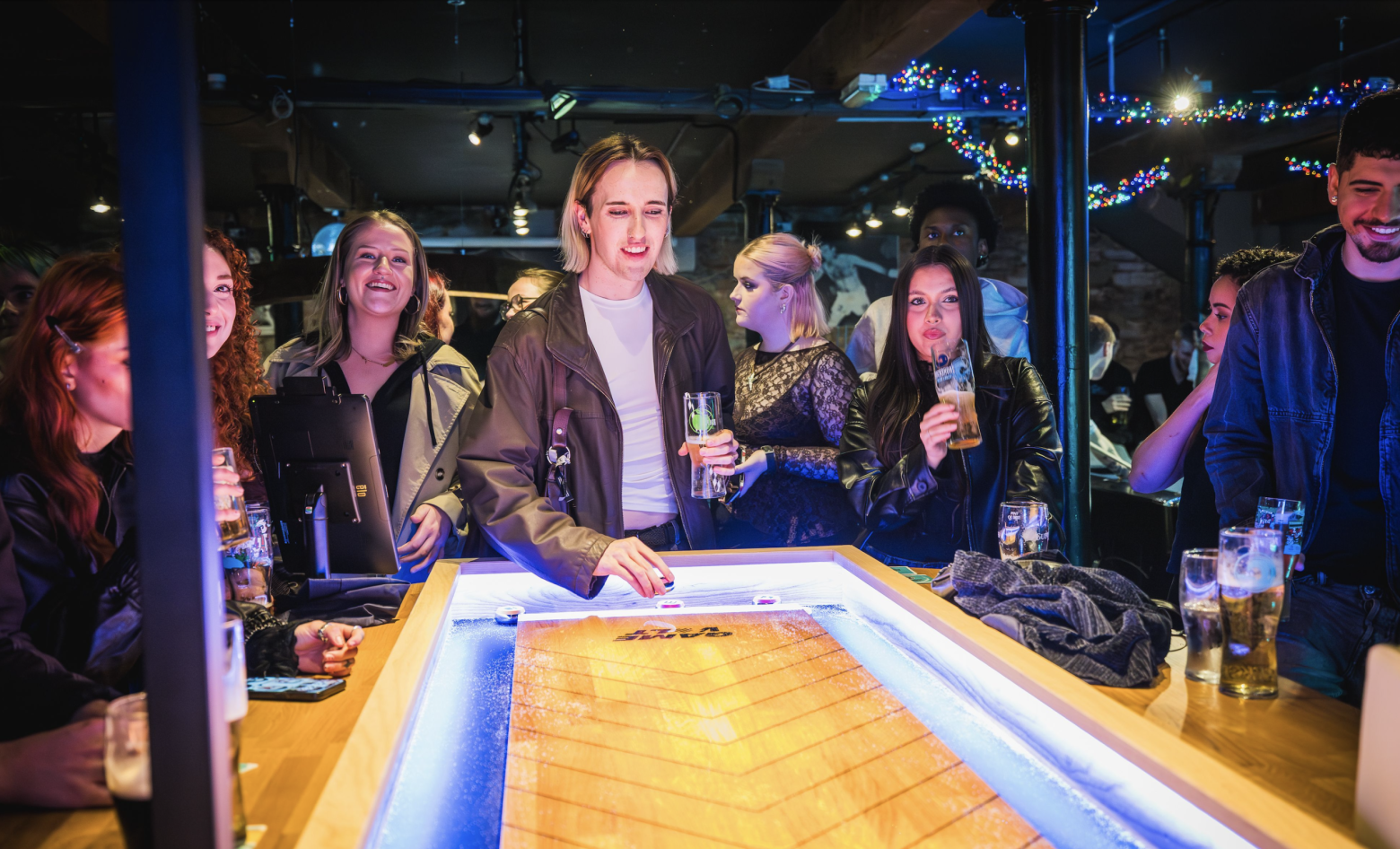
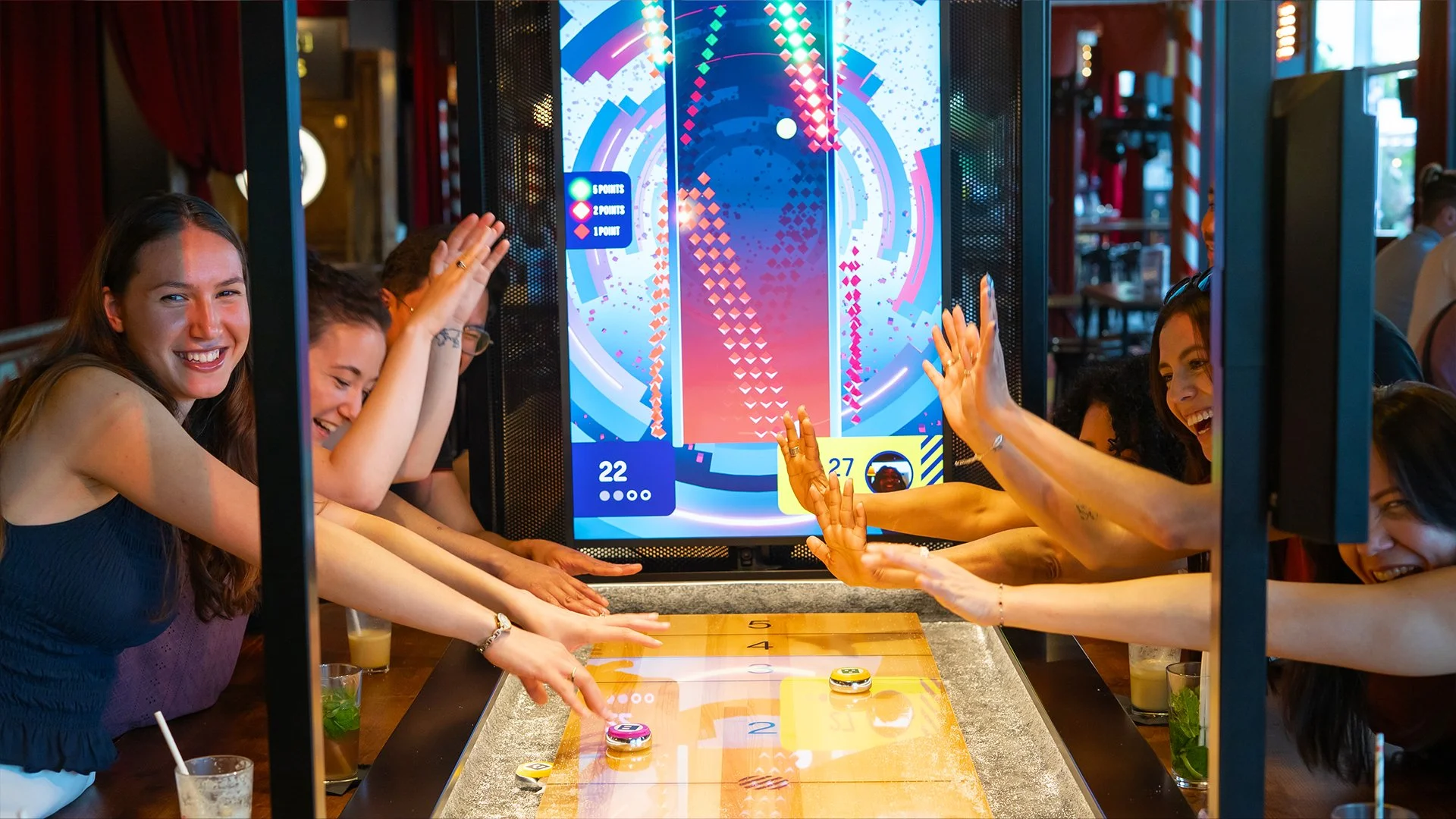
Interactive shuffleboard contributes directly to this because it transforms passive hospitality spaces into active social environments.
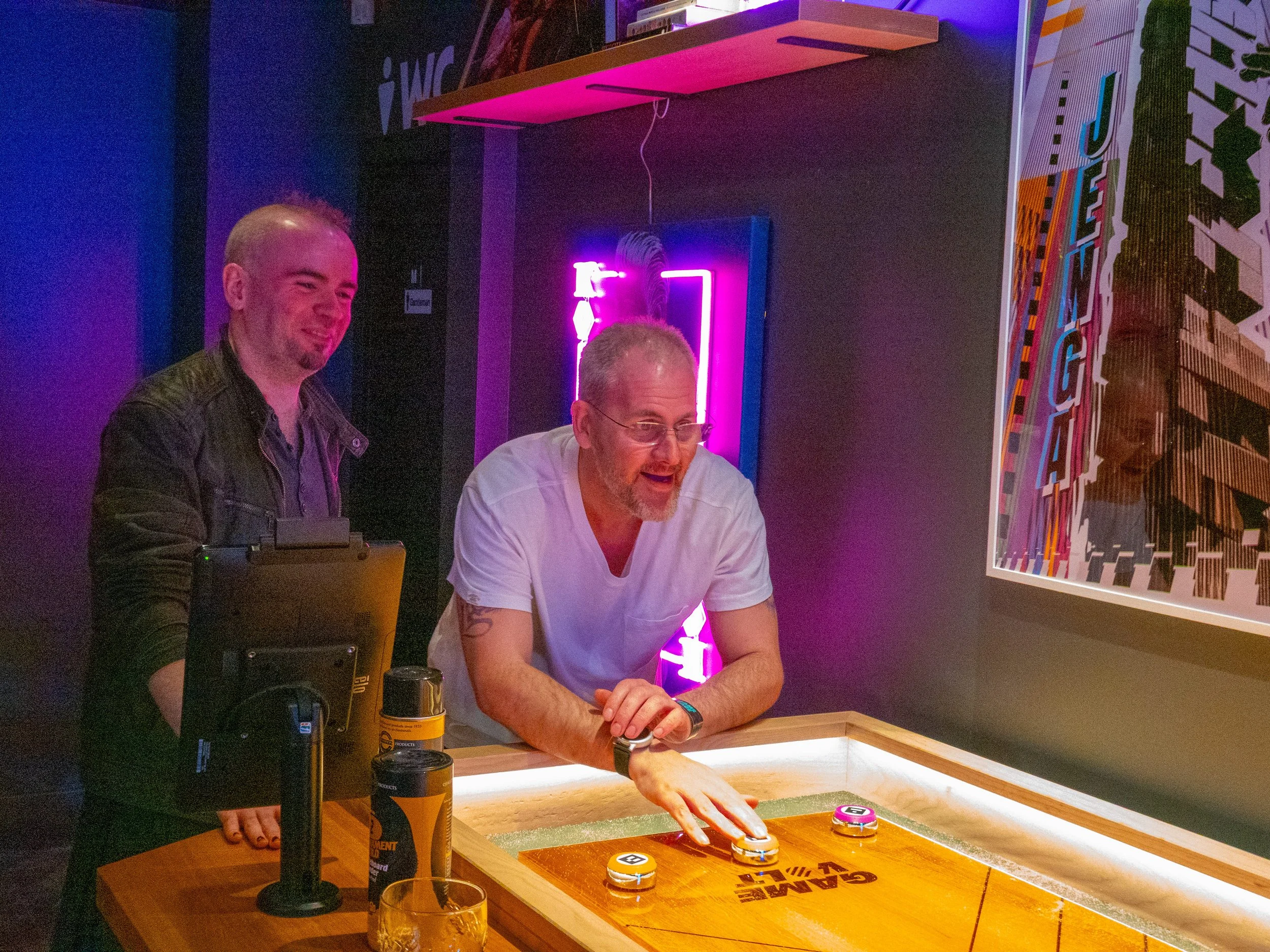
A hotel lounge or bar no longer functions solely as a place to sit. It becomes a place where guests gather, compete, interact, and spend longer periods of time engaging with the venue itself.
That shift changes the entire energy of the space.
The difference an interactive layer creates
Traditional shuffleboard tables can work well within hospitality spaces, but the experience often lacks momentum.
Manual scoring slows gameplay. Guests lose track of rounds. Energy fades quickly.
Interactive shuffleboard changes that dynamic completely.
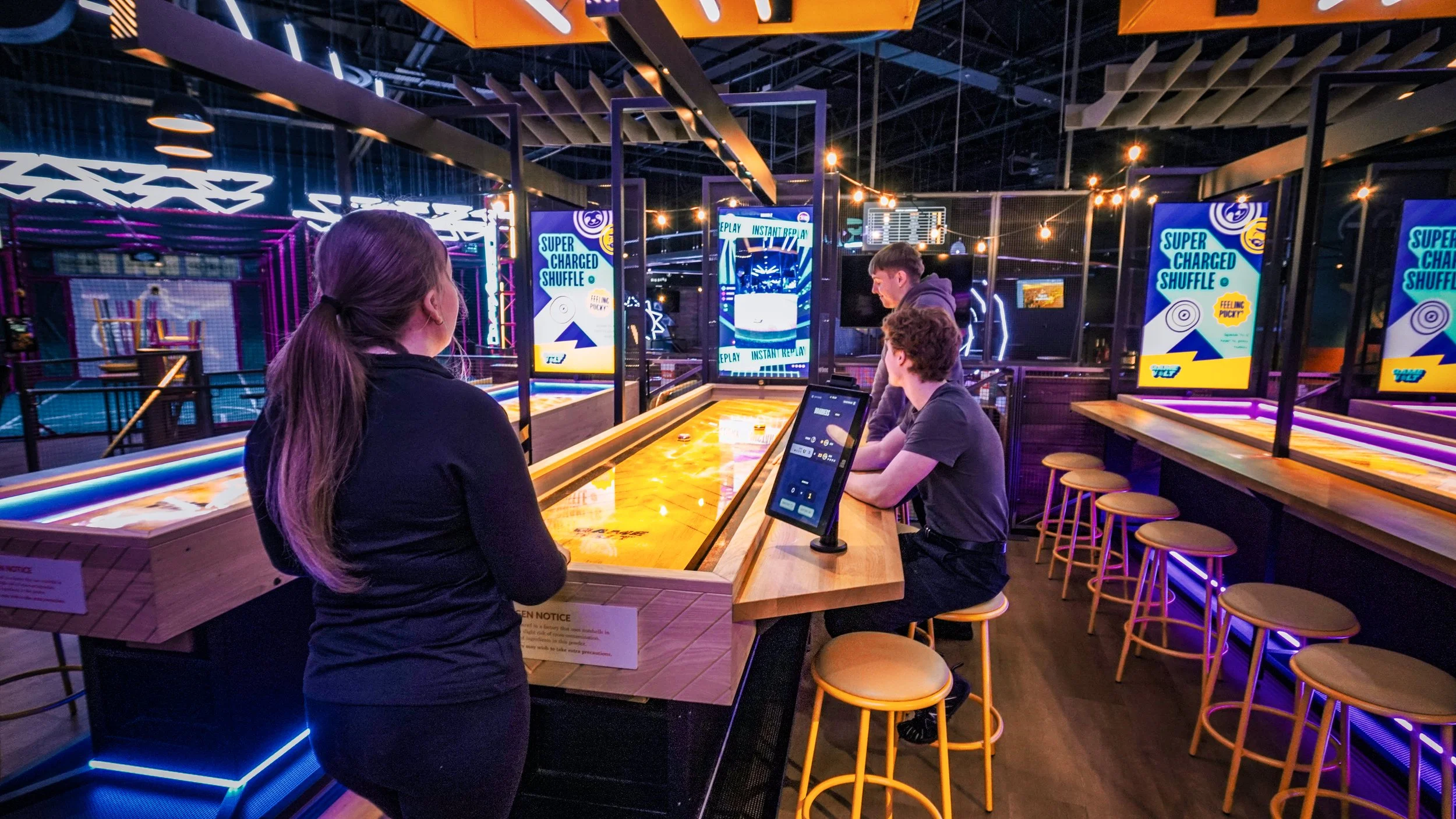
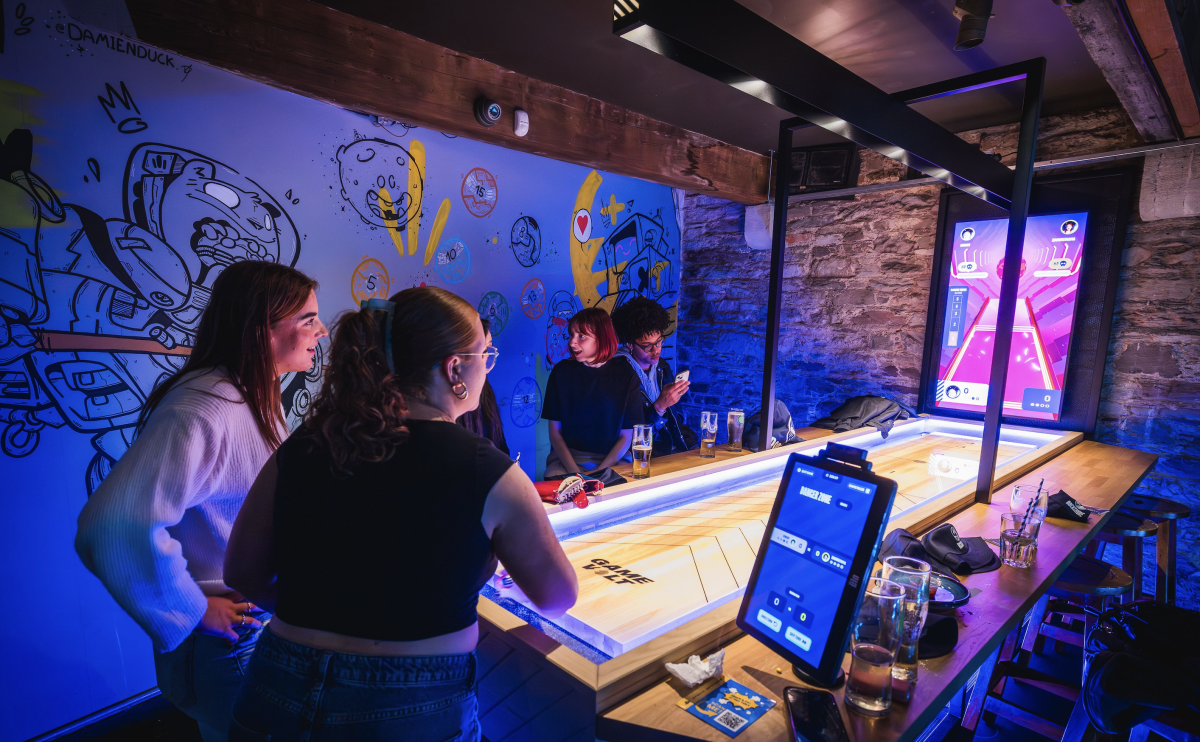
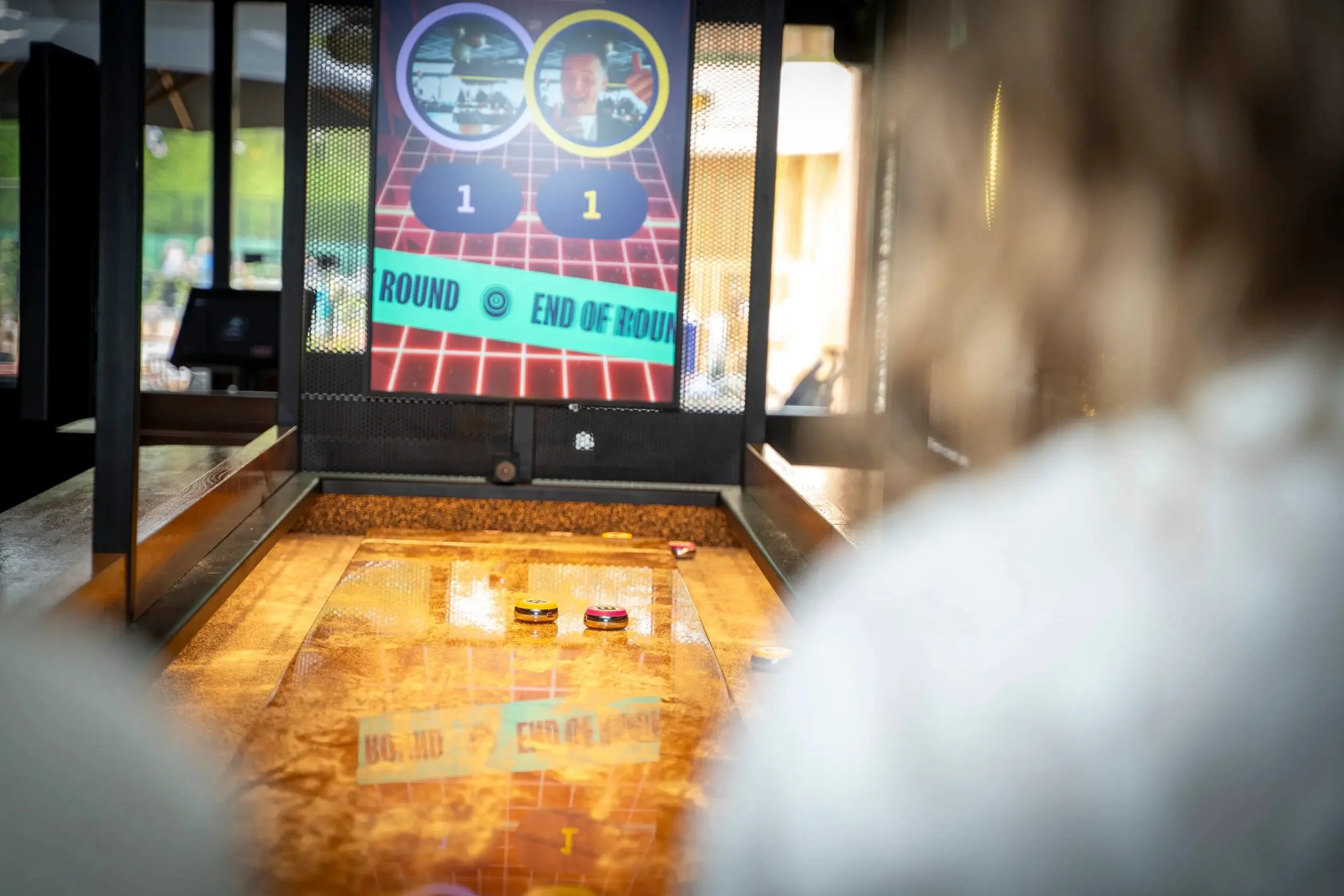
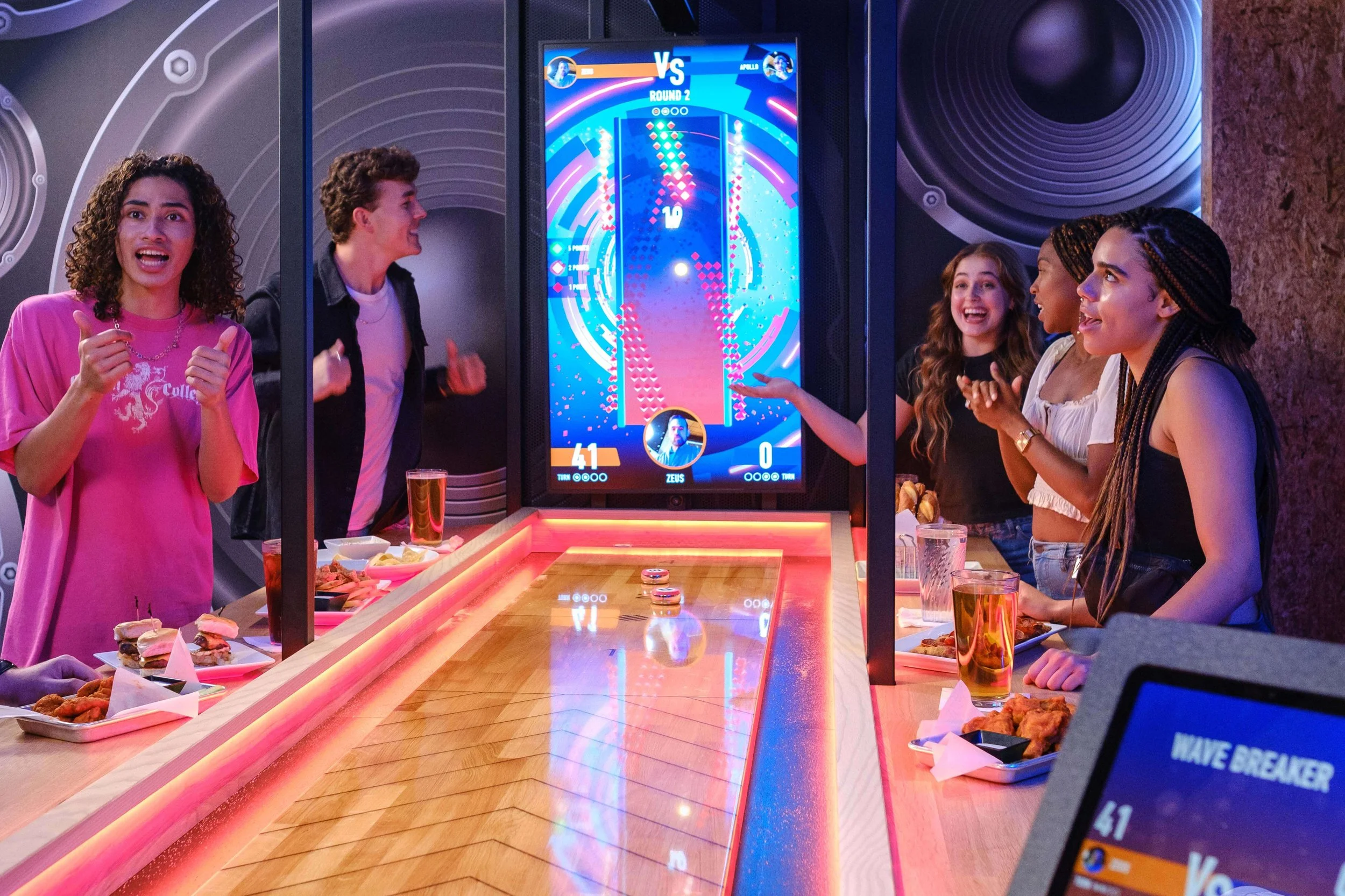
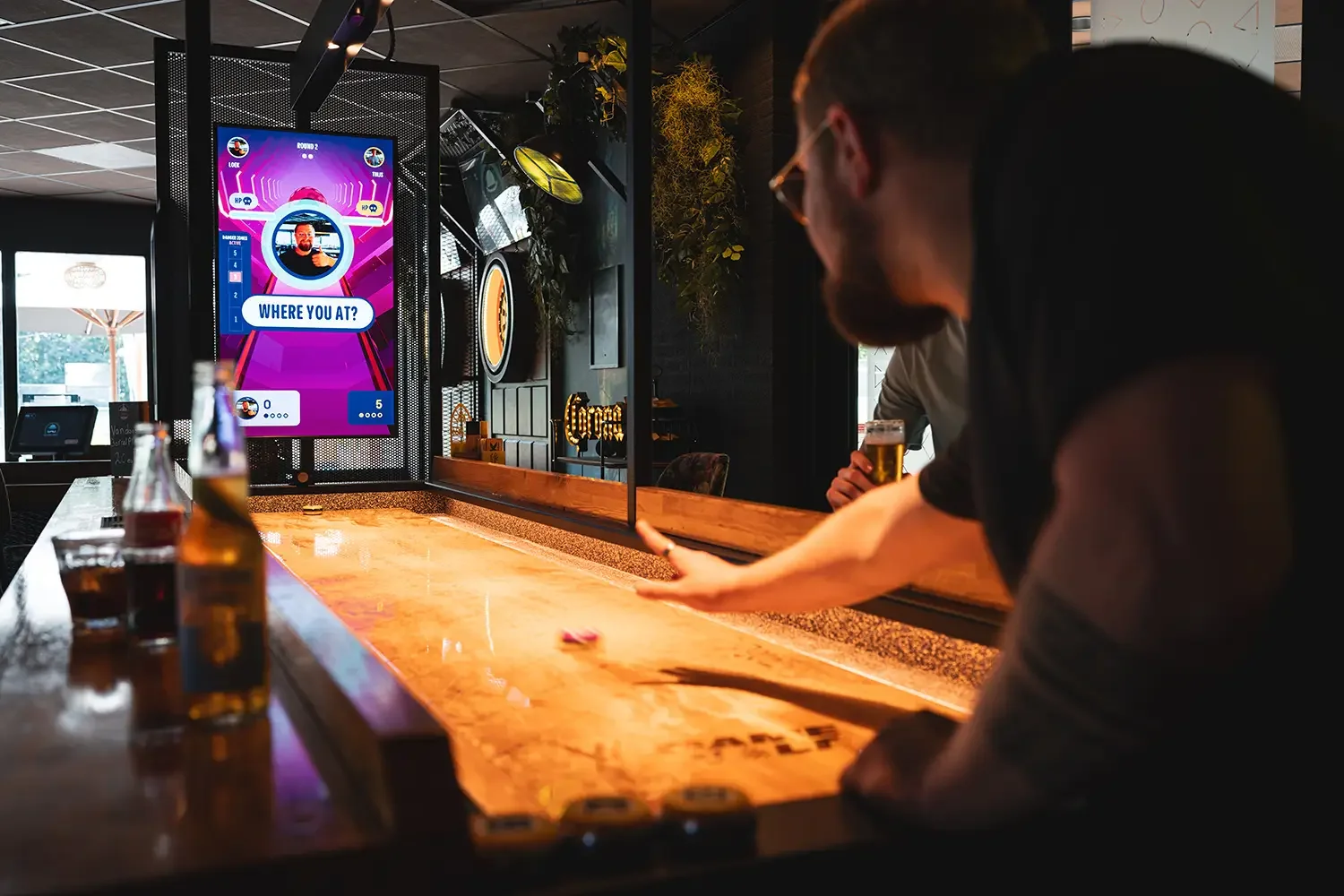
Automatic scoring keeps the pace moving naturally. Multiple game modes create variety and replayability. The experience becomes more competitive, more social, and significantly more engaging without becoming intimidating to new players.
Most importantly, it creates reasons for guests to stay involved longer.
This matters commercially because extended engagement almost always translates into increased food and beverage spend within hotel environments.
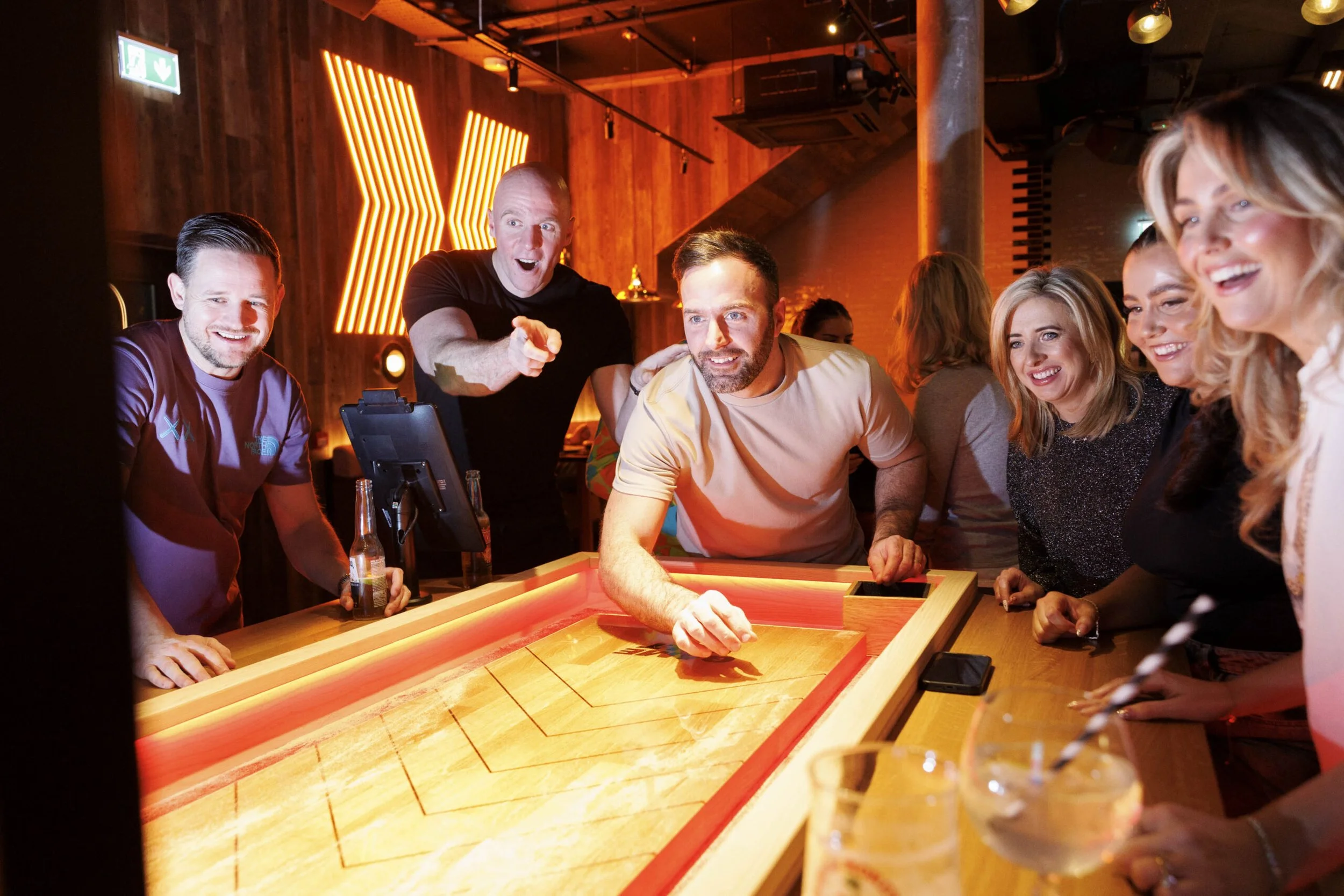
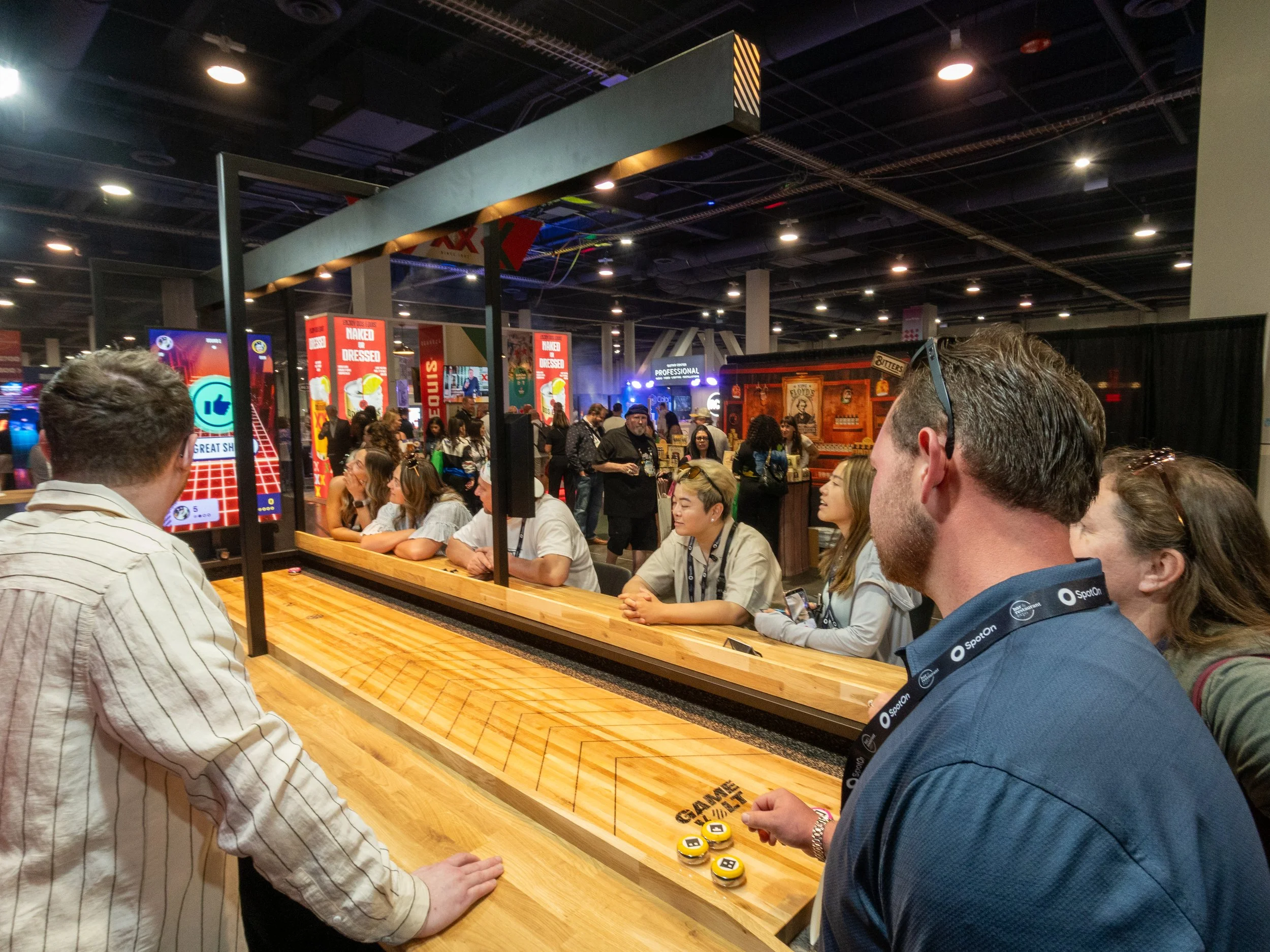
Shuffleboard occupies a unique position within hospitality entertainment because it feels immediately approachable.
Unlike some activities that require commitment, specialist knowledge, or high physical intensity, shuffleboard is instinctive. Guests understand the objective almost instantly, which removes the hesitation that often stops people from engaging with entertainment spaces in hotels.
That simplicity matters because hotel audiences are incredibly varied.
On any given day, a hotel may be hosting:
business travellers
couples on weekend breaks
families
conference delegates
group celebrations
local visitors using bars and leisure spaces
Interactive shuffleboard works across all of those audiences because it adapts naturally to different social situations. It can operate as a casual activity alongside drinks, a competitive group experience during corporate events, or an evening attraction within wider leisure spaces.
Activating underutilised hotel spaces
Many hotels contain spaces that struggle to fulfil their commercial potential.
Large lounge areas, transitional bar spaces, and quieter corners of leisure environments can often feel passive outside peak periods. Interactive entertainment helps activate those areas without fundamentally changing the character of the venue.
Interactive shuffleboard works particularly well because it contributes atmosphere rather than overpowering it.
The game naturally creates:
movement around the space
spectator engagement
conversation between groups
repeat interaction throughout the evening
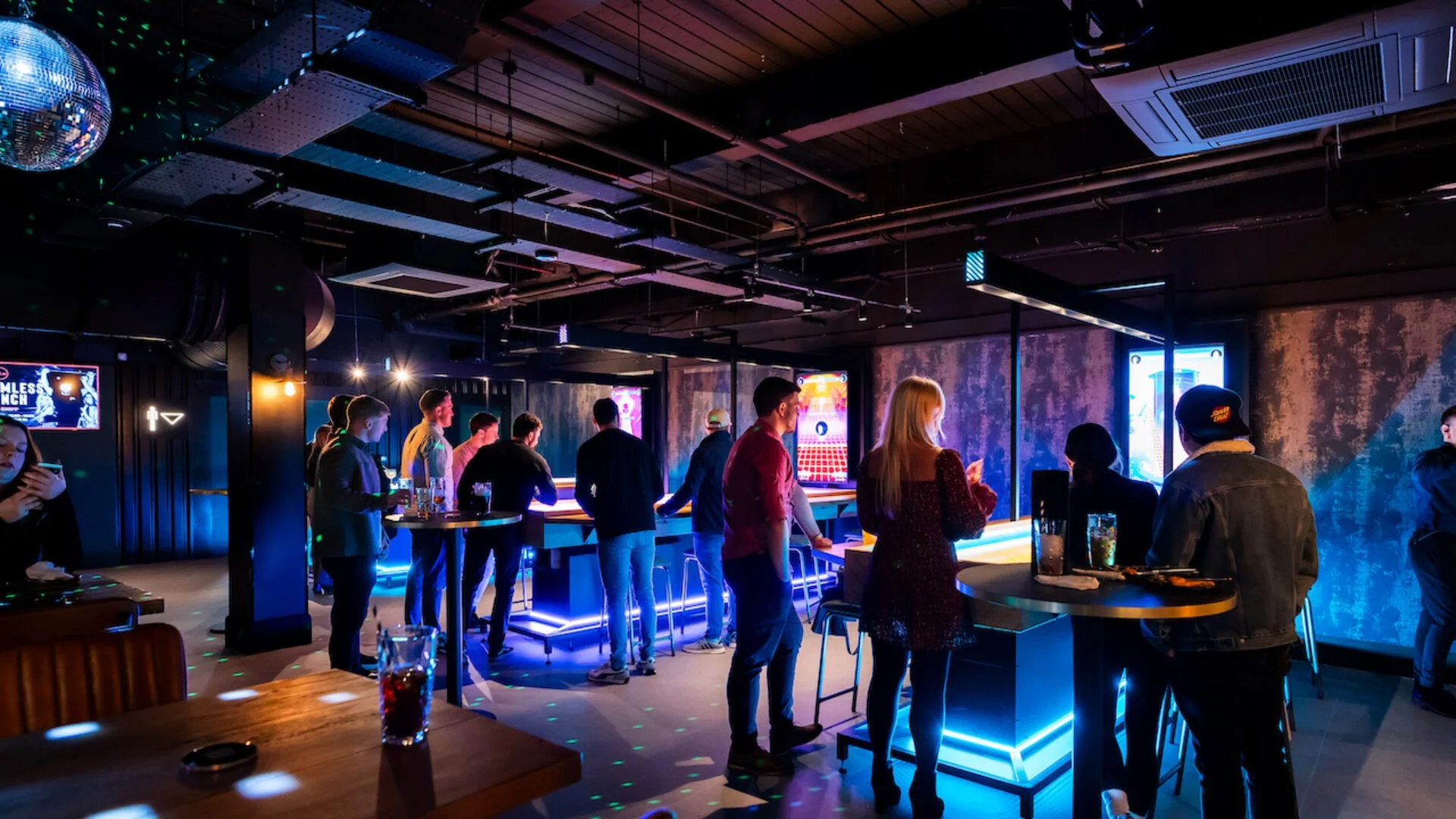
Instead of feeling like empty floor space, these areas become destinations within the hotel itself.
Supporting the rise of social hospitality
Hotels are increasingly embracing elements of competitive socialising as part of wider hospitality trends.
Guests are looking for experiences that feel interactive and shareable rather than static. This is especially important for hotels trying to attract local audiences in addition to overnight guests.
Interactive shuffleboard supports this shift naturally.
It creates an experience guests can build an evening around while still complementing the wider hospitality environment. Unlike louder or more intensive attractions, shuffleboard integrates comfortably into premium hotel bars and lounges without disrupting the atmosphere operators are trying to create
A strong fit for corporate and group events
Corporate hospitality has become increasingly experience-driven.
Conference delegates and business groups are no longer looking solely for formal meeting spaces. Hotels that provide opportunities for informal social interaction often create stronger overall guest experiences.
Interactive shuffleboard performs particularly well in this environment because it removes awkwardness from group interaction.
The activity creates natural conversation and competition without demanding significant time commitment or physical effort. This makes it highly effective for:
networking events
corporate socials
team-building evenings
private hire spaces
conference entertainment
It adds energy to events without requiring complicated facilitation.
Reliability within hospitality environments
Hotels demand entertainment systems that operate consistently and discreetly.
Technology that requires constant intervention or struggles under changing conditions quickly becomes problematic within hospitality spaces, where staff priorities are focused on guest service rather than technical management.
Interactive shuffleboard systems designed for commercial hospitality environments are built to perform consistently across:
varied lighting conditions
continuous guest usage
busy evening trading periods
mixed audience demographics
Reliability is essential because the experience becomes part of the wider perception of the hotel itself.
Creating reasons for guests to return
One of the biggest challenges for hospitality venues is creating experiences that guests actively remember and seek out again.
Interactive shuffleboard contributes strongly to repeat visitation because it creates moments that feel inherently social. Guests rarely experience it in isolation. They associate it with conversations, celebrations, competition, and shared experiences during their stay.
Those emotional associations are incredibly valuable within hospitality.
They influence:
guest reviews
recommendations
repeat bookings
local reputation
overall perception of the venue experience
The commercial impact for hotels
For operators, the benefits extend well beyond entertainment itself.
Interactive shuffleboard helps hotels:
increase dwell time within bars and lounges
drive additional food and beverage revenue
activate underutilised leisure spaces
strengthen social atmosphere
attract non-resident visitors
enhance corporate and group offerings
Most importantly, it creates an experience that feels modern without feeling intrusive, allowing hotels to evolve their entertainment offering while maintaining the character of the wider hospitality environment.
FIND SUPERCHARGED SHUFFLE IN:
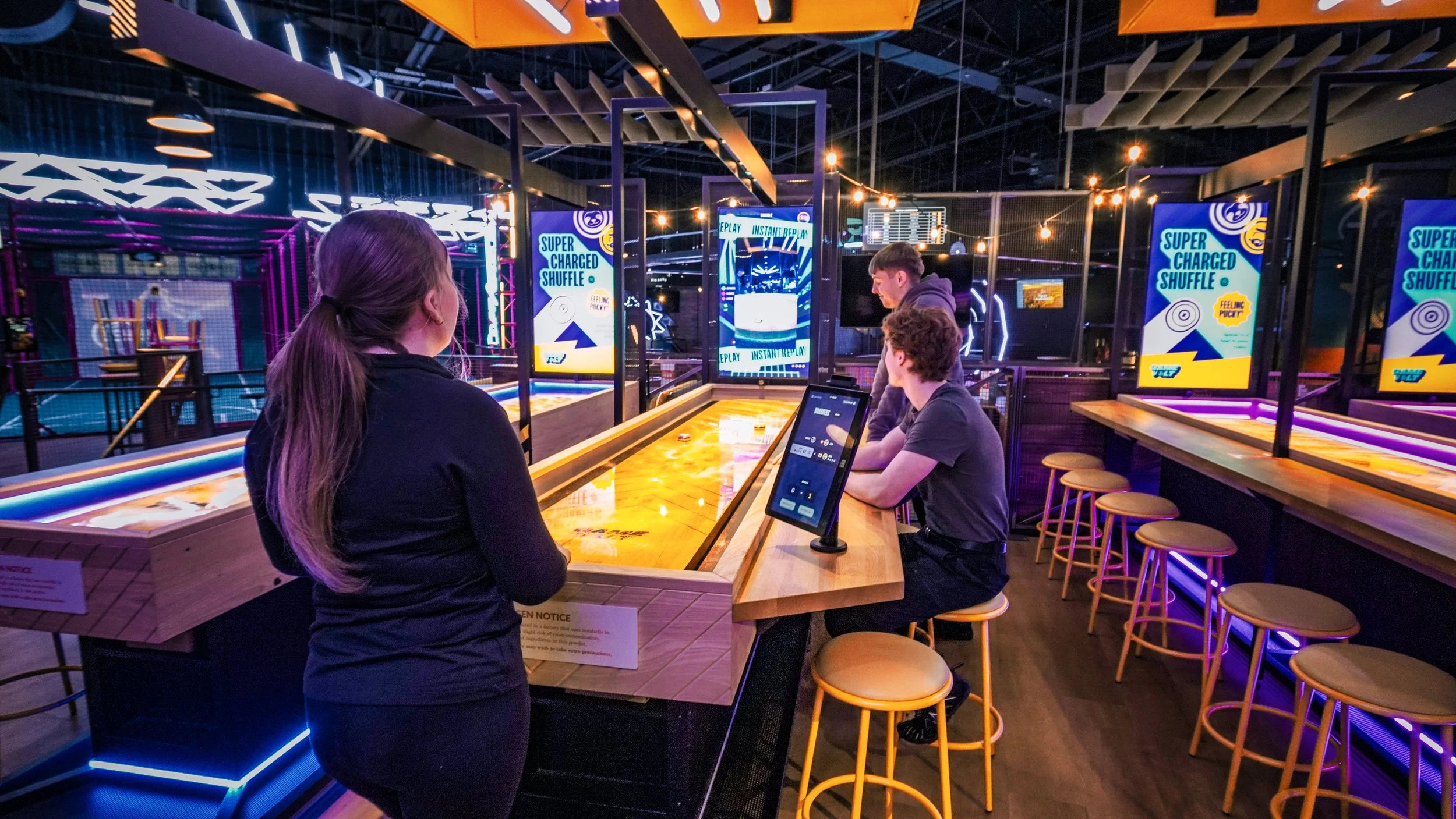
CENTER PARCS
mardyke
de hoge heide
PAR 59
…AND MORE.
Summary
Hotels are increasingly competing on experience rather than accommodation alone.
Interactive shuffleboard succeeds because it strengthens the moments between check-in and checkout. It encourages interaction, extends engagement within hospitality spaces, and creates social experiences guests naturally remember afterwards.
For hotels looking to modernise leisure environments, increase guest engagement, and create more commercially effective social spaces, interactive shuffleboard offers a solution that feels both contemporary and timeless at the same time.